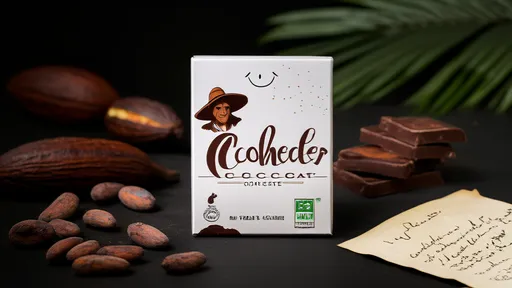
The glossy packaging of Fairtrade-certified chocolate bars often carries images of smiling cocoa farmers and promises of equitable wages. Yet behind these feel-good labels lies a complex reality that rarely reaches Western consumers. A six-month investigation across Ivory Coast and Ghana—which together produce nearly 60% of the world’s cocoa—reveals persistent gaps between certification promises and actual farmer incomes.
Living Below the Poverty Line
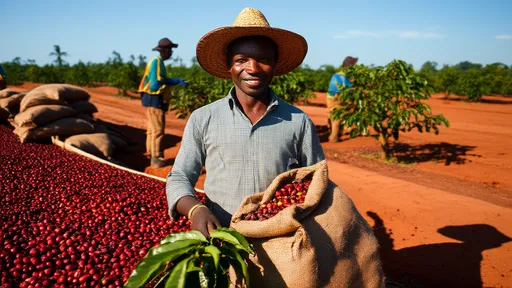
In the village of Soubré, Ivory Coast, 54-year-old cocoa grower Amadou Kone shows his cracked hands—worn from decades of harvesting pods—and laughs bitterly when asked about Fairtrade premiums. "The cooperatives take the bonus money for projects, but my children still can’t afford schoolbooks," he says. Like most smallholders in the region, Kone earns about $1.20 per day from cocoa, well below the World Bank’s $2.15 extreme poverty threshold. This despite his farm being Fairtrade-certified since 2017.
Fairtrade International’s own data acknowledges that only 37% of certified cocoa farmers achieve a "living income benchmark." The organization defines this as $7,043 annually for Ivorian households, but most farmers interviewed reported earnings under $3,000—including premium payments. "Certification helps, but it’s not enough to break cycles of poverty," explains Dr. Ama Mensah, an agricultural economist at the University of Ghana. "The system assumes cooperatives distribute benefits equitably, but power dynamics often prevent that."
The Middlemen Dilemma
Supply chain opacity compounds the problem. Chocolate companies pay Fairtrade premiums—currently $240 per metric ton—to farmer cooperatives, not individual growers. These funds are meant for community development or direct cash payments. However, multiple farmers described situations where cooperative leaders diverted money for personal gain or poorly managed collective projects.
In Ghana’s Western Region, mid-level aggregator Kwame Asare (who asked to use a pseudonym) admits: "I pay the same farmgate price whether cocoa is certified or not. The premium goes to the cooperative, and maybe 10% trickles down." This matches findings from the VOICE Network, an NGO consortium, which estimates farmers receive just 11-19% of final chocolate product value—compared to 16% in the 1980s before certification schemes existed.
Certification’s Structural Limits
Fairtrade International emphasizes that their standards represent a "floor, not a ceiling" for ethical sourcing. Spokesperson Claire Wren points to recent minimum price increases: "We’ve raised the cocoa base price by 21% since 2019, plus added climate adaptation funds." Yet these adjustments barely offset inflation in farming communities, where fertilizer costs have nearly doubled since 2020.
The certification model itself faces inherent challenges. Audit requirements—from pesticide restrictions to child labor monitoring—increase production costs without guaranteed price returns. Many farmers maintain parallel certified and non-certified plots, selling the latter to local traders at similar prices but with fewer constraints. "When my certified crop fails, I lose more because I followed expensive organic rules," says Ghanaian farmer Efua Badu.
Market Realities vs. Ethical Ideals
Consumer psychology plays a surprising role. While 65% of chocolate buyers claim willingness to pay more for ethical products (per Fairtrade Foundation research), actual premium product sales remain below 15% in most markets. This limits brands’ ability to transfer higher payments through the chain. "Companies won’t sacrifice margins unless shoppers consistently choose $5 bars over $1 ones," notes confectionery analyst Mark Daniels.
Some farmers are voting with their feet. Young growers increasingly abandon cocoa for rubber or illegal gold mining (galamsey), where earnings can triple. In Ivory Coast’s cocoa heartland, the average farmer age is now 51—up from 45 in 2010—as fewer youths enter the industry. "My sons say cocoa is ‘grandfather’s work,’" laments Kone. "They’d rather drive moto-taxis in Abidjan."
Paths Forward
Emerging models show potential alternatives. Direct trade company Beyond Good pays farmers $1,200 per ton—over double the Fairtrade minimum—by cutting intermediaries and owning Madagascar-to-factory operations. However, such vertically integrated systems remain niche, covering under 2% of global cocoa.
Policy shifts could help. The EU’s incoming deforestation regulation will require geolocated farm coordinates, potentially improving traceability. Ghana and Ivory Coast’s joint 2019 decision to mandate a $400-per-ton "living income differential" (LID) marked progress, though implementation has been inconsistent. "LID gets absorbed by traders unless governments enforce price controls," cautions Mensah.
For now, certification remains the most scalable ethical sourcing tool, albeit an imperfect one. As consumer awareness grows, so does pressure for systemic change. The bitter truth? That chocolate’s true cost may require more than fair trade labels—it might demand rethinking global commodity economics altogether.

By /Jul 4, 2025
By /Jul 4, 2025

By /Jul 4, 2025

By /Jul 4, 2025

By /Jul 4, 2025
By /Jul 4, 2025
By /Jul 4, 2025
By /Jul 4, 2025
By /Jul 4, 2025

By /Jul 4, 2025

By /Jul 4, 2025

By /Jul 4, 2025

By /Jul 4, 2025

By /Jul 4, 2025

By /Jul 4, 2025

By /Jul 4, 2025

By /Jul 4, 2025

By /Jul 4, 2025

By /Jul 4, 2025

By /Jul 4, 2025