The world's love affair with chocolate is facing an unprecedented crisis. As global cocoa prices skyrocket and supply chains falter, what was once an affordable indulgence has become a geopolitical flashpoint. The story behind your chocolate bar now involves climate change, exploitative labor practices, and the delicate balance of power between producing and consuming nations.
The Cocoa Powder Keg
West Africa's Ivory Coast and Ghana produce nearly 60% of the world's cocoa, creating an extraordinary concentration of power in one volatile region. When heavy rains destroyed crops last harvest season or when political instability rocked the region, the effects rippled through chocolate factories from Switzerland to Pennsylvania. This extreme geographic dependence makes global chocolate supply chains uniquely vulnerable to both natural and man-made disasters.
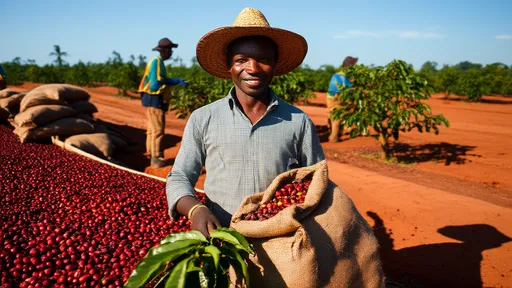
European chocolatiers have dominated the industry for centuries, but their business models rely on cheap cocoa from former colonies. As cocoa farmers demand higher prices and better working conditions, the entire economic structure of chocolate production is being called into question. The bitter truth is that most cocoa growers earn less than $1 per day while multinational corporations reap billions in profits.
Climate Change's Bitter Aftertaste
Rising temperatures and shifting rainfall patterns are decimating cocoa crops across the equatorial belt. The trees require very specific conditions - consistent warmth, high humidity, and rich soil - that are becoming increasingly rare. Scientists predict that by 2050, much of West Africa's cocoa-growing land will become unsuitable for cultivation.
This environmental crisis has sparked a new scramble for suitable cocoa-growing territory. Large manufacturers are quietly acquiring land in Southeast Asia and South America as potential relocation sites. These land grabs often displace local farmers and indigenous communities, creating new geopolitical tensions in regions previously unconnected to chocolate production.
The Ethical Chocolate Wars
Child labor allegations have haunted the cocoa industry for decades, despite numerous pledges to eradicate the practice. Recent investigations found over 1.5 million children working on cocoa farms in Ghana and Ivory Coast alone. Western governments increasingly pressure chocolate companies to clean up their supply chains, but the solutions are neither simple nor cheap.
Fair trade certification programs have gained traction among conscious consumers, yet they cover less than 10% of global cocoa production. The uncomfortable reality is that ethically sourced chocolate remains a luxury most consumers cannot afford. This creates a two-tier market where morality becomes a premium product.
Chocolate as Economic Weapon
Cocoa-exporting nations are beginning to flex their political muscles. In 2020, Ghana and Ivory Coast jointly imposed a $400 per ton "living income differential" on cocoa sales. This unprecedented cooperation between rival producers marked a turning point in commodity politics. For the first time, growing nations demonstrated they could collectively dictate terms to the chocolate industry.
The move sent shockwaves through financial markets and prompted emergency meetings at major chocolate corporations. Some analysts compare it to OPEC's oil embargo in the 1970s - a moment when commodity producers realized their collective power. If cocoa-growing nations continue to coordinate their policies, it could fundamentally reshape global chocolate economics.
The Dark Side of Sweet Diplomacy
Chocolate has become an unlikely tool of international relations. Belgium uses its famous pralines as diplomatic gifts, while Switzerland's chocolate reputation boosts its global soft power. Meanwhile, the U.S. military includes chocolate in MREs (Meals Ready-to-Eat) as both morale booster and calorie-dense ration.
During trade negotiations, chocolate often serves as both bargaining chip and pressure point. The European Union's strict regulations on chocolate imports have sparked decades of trade disputes with the United States and other producers. These battles over cocoa butter percentages and milk solids reveal how deeply food standards are tied to national identity and economic protectionism.
The Future of Chocolate Politics
As climate pressures intensify, scientists race to develop more resilient cocoa varieties through both traditional breeding and genetic modification. These efforts raise new questions about intellectual property rights and who will control the future of chocolate's core ingredient. Will patented cocoa strains become the next Monsanto-style controversy?
Alternative chocolate products made from carob or lab-grown cocoa cells are gaining investment, threatening to disrupt traditional supply chains entirely. The coming decade may see the most radical transformation in chocolate production since the Industrial Revolution - with profound consequences for the millions of small farmers whose livelihoods depend on the cocoa trade.
The geopolitics of chocolate reveal uncomfortable truths about globalization, inequality, and climate change. That innocent candy bar contains centuries of colonial history, modern economic injustice, and looming ecological disaster. As consumers become more aware of these connections, their purchasing decisions may ultimately determine whether chocolate remains a universal pleasure or becomes another casualty of our fractured world.

By /Jul 4, 2025

By /Jul 4, 2025

By /Jul 4, 2025

By /Jul 4, 2025

By /Jul 4, 2025
By /Jul 4, 2025

By /Jul 4, 2025
By /Jul 4, 2025
By /Jul 4, 2025

By /Jul 4, 2025
By /Jul 4, 2025

By /Jul 4, 2025

By /Jul 4, 2025

By /Jul 4, 2025

By /Jul 4, 2025

By /Jul 4, 2025

By /Jul 4, 2025

By /Jul 4, 2025

By /Jul 4, 2025

By /Jul 4, 2025