The concept of direct trade coffee has gained significant traction in recent years, promising a fairer deal for farmers by eliminating middlemen. The idea is simple: by cutting out intermediaries, more money should theoretically reach the growers. But does this model truly deliver on its promise, or is it just another well-marketed illusion in the complex world of coffee economics?
Direct trade coffee emerged as a response to the flaws of traditional supply chains, where farmers often receive only a fraction of the final retail price. In conventional systems, coffee passes through multiple hands—exporters, importers, roasters, and retailers—each taking a cut along the way. This leaves growers with minimal profits, sometimes barely enough to cover production costs. Direct trade aims to disrupt this cycle by establishing a direct connection between farmers and buyers, typically specialty coffee roasters.
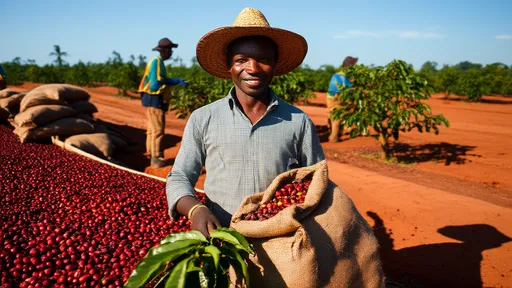
The appeal of direct trade lies in its transparency. Roasters who adopt this model often visit coffee farms personally, building long-term relationships with producers. They negotiate prices directly, usually paying well above commodity market rates. This approach not only ensures better compensation for farmers but also encourages quality improvement, as growers are incentivized to produce superior beans for higher pay.
However, the reality of direct trade is more nuanced than its idealistic portrayal. While some farmers undoubtedly benefit, the system isn't without its challenges. For starters, direct trade requires significant effort and resources from both producers and buyers. Farmers must meet strict quality standards and handle logistics they previously relied on middlemen to manage. Small-scale growers, in particular, may struggle with the added responsibilities of direct sales, from packaging to export documentation.
Another critical factor is market access. Direct trade works best for farmers who can produce high-quality, specialty-grade coffee that commands premium prices. But what about the majority of coffee growers who cultivate standard-grade beans? These producers often lack the quality or volume to attract direct buyers, leaving them dependent on traditional supply chains. In this sense, direct trade risks creating a two-tier system where only the most privileged farmers reap the benefits.
The financial gains for farmers under direct trade also vary widely depending on the buyer's ethics. Some roasters genuinely prioritize farmer welfare, paying prices that reflect the true cost of sustainable production. Others may use the "direct trade" label as a marketing gimmick while offering only marginally better terms than conventional buyers. Without standardized pricing or certification, it's difficult for consumers to distinguish between these approaches.
Infrastructure presents another hurdle. Many coffee-growing regions lack reliable transportation, processing facilities, or communication networks—all essential for direct trade to function smoothly. Middlemen traditionally filled these gaps by providing financing, storage, and market connections. When removed without alternative support systems, farmers can find themselves worse off, struggling to navigate complex international trade alone.
Despite these challenges, successful direct trade relationships do exist and demonstrate the model's potential. In regions like Ethiopia and Colombia, some cooperatives have flourished by selling directly to overseas roasters. These cases often involve farmer organizations with sufficient scale and organization to handle direct sales effectively. The key seems to lie in building farmer capacity alongside market connections, rather than simply removing intermediaries.
The impact of direct trade on farmer income ultimately depends on how the model is implemented. When done right—with fair pricing, capacity building, and genuine partnership—it can significantly improve growers' livelihoods. But as a blanket solution to coffee's inequities, direct trade falls short. The coffee industry needs systemic changes that address all producers, not just those capable of meeting specialty market demands.
Consumer awareness plays a crucial role in this equation. Coffee drinkers willing to pay premium prices for direct trade products drive the model's growth. However, without transparency about how much actually reaches farmers, even well-intentioned purchases may not create the intended impact. Some experts argue for hybrid models that maintain certain intermediary functions while ensuring fairer compensation at the farm level.
The debate around direct trade reflects broader questions about ethical consumption and global trade justice. While it represents progress toward fairer coffee economics, it's not a panacea. Truly equitable trade requires addressing power imbalances, investing in producer communities, and creating structures that benefit all stakeholders—not just replacing one system with another that works for a select few.
As the coffee industry continues to evolve, the lessons from direct trade—both positive and negative—can inform better approaches to value distribution. The goal shouldn't merely be cutting out middlemen, but reconstructing supply chains that honor the labor of growers while delivering quality to consumers. This nuanced understanding is essential for anyone genuinely concerned about whether farmers earn more when the trade goes direct.

By /Jul 4, 2025
By /Jul 4, 2025
By /Jul 4, 2025

By /Jul 4, 2025

By /Jul 4, 2025
By /Jul 4, 2025

By /Jul 4, 2025
By /Jul 4, 2025
By /Jul 4, 2025
By /Jul 4, 2025
By /Jul 4, 2025

By /Jul 4, 2025

By /Jul 4, 2025
By /Jul 4, 2025
By /Jul 4, 2025

By /Jul 4, 2025

By /Jul 4, 2025

By /Jul 4, 2025

By /Jul 4, 2025

By /Jul 4, 2025