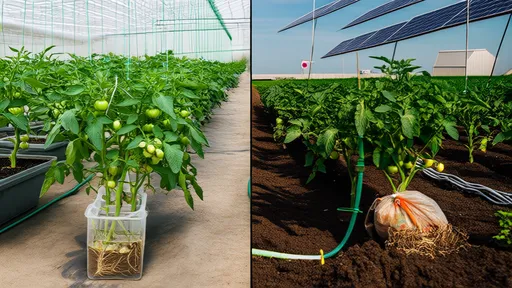
The debate between hydroponic and soil-grown tomatoes has gained traction in recent years, particularly as sustainability becomes a focal point in agriculture. While hydroponics is often marketed as the greener alternative, the reality is far more nuanced. Both methods have their environmental trade-offs, and understanding them requires a deeper dive into resource use, energy consumption, and long-term ecological impact.
The Promise of Hydroponics: Efficiency and Control
Hydroponic systems are celebrated for their efficiency. By delivering nutrients directly to plant roots in a water-based solution, they eliminate the need for soil, reducing the risk of pests and diseases. This often translates to lower pesticide use, a clear environmental benefit. Additionally, hydroponics can produce higher yields in smaller spaces, making it an attractive option for urban farming and regions with poor soil quality.
Water conservation is another frequently cited advantage. Hydroponic systems recirculate water, drastically cutting usage compared to traditional soil farming, where much of the water is lost to evaporation or runoff. In areas facing water scarcity, this can be a game-changer. However, the environmental footprint of hydroponics isn’t just about water—it’s also about energy.
The Hidden Costs: Energy and Infrastructure
Hydroponic farms rely heavily on artificial lighting, climate control, and water pumps, all of which demand significant electricity. If that energy comes from fossil fuels, the carbon footprint can offset the benefits of water savings. A study comparing the two methods found that while hydroponics uses up to 90% less water, its energy consumption can be ten times higher than soil-based farming.
Then there’s the issue of infrastructure. Hydroponic systems require plastic containers, PVC pipes, and synthetic growing media, all of which have manufacturing and disposal impacts. Unlike soil, which can regenerate over time, these materials often end up as waste. The longevity and recyclability of hydroponic equipment are critical factors in assessing its overall sustainability.
Soil-Grown Tomatoes: The Natural Ecosystem
Traditional soil farming has its own environmental credentials. Healthy soil acts as a carbon sink, sequestering CO2 from the atmosphere—a feature hydroponics can’t replicate. Organic soil farming also promotes biodiversity, supporting microbes, fungi, and insects that contribute to a resilient ecosystem. When done responsibly, soil cultivation can improve land health over time, rather than deplete it.
That said, conventional soil agriculture isn’t without flaws. Excessive tilling can lead to erosion, and overuse of synthetic fertilizers can pollute waterways. Large-scale tomato farming often relies on monocropping, which degrades soil diversity. The key difference is that soil systems have the potential to be regenerative, whereas hydroponics is inherently dependent on external inputs.
Local Context Matters
Whether hydroponics is greener than soil farming depends largely on location. In arid regions like the Middle East or California, where water is scarce, hydroponics’ efficiency may outweigh its energy drawbacks. In places with abundant rainfall and fertile soil, traditional farming might be the more sustainable choice. Transport is another factor—hydroponic farms can be set up closer to cities, reducing food miles, but if they’re powered by dirty energy, those gains are negated.
Consumer perception also plays a role. Many assume "soil-free" equals "eco-friendly," but that’s an oversimplification. Without transparency about energy sources and supply chains, hydroponics can greenwash its environmental impact. Meanwhile, regenerative soil practices, though less tech-savvy, offer proven long-term benefits.
The Verdict: No Clear Winner
There’s no one-size-fits-all answer to which method is greener. Hydroponics excels in resource efficiency and space-saving but falters on energy use and material waste. Soil farming supports ecosystems and carbon sequestration but struggles with water and land degradation. The most sustainable future likely involves a blend of both, tailored to regional needs and powered by renewable energy.
As consumers, the best we can do is ask questions: Where does the energy come from? How is waste managed? Are farms prioritizing long-term health over short-term yields? Only then can we truly gauge which tomato—hydroponic or soil-grown—leaves a lighter footprint on the planet.
By /Jul 4, 2025

By /Jul 4, 2025
By /Jul 4, 2025

By /Jul 4, 2025

By /Jul 4, 2025
By /Jul 4, 2025

By /Jul 4, 2025
By /Jul 4, 2025
By /Jul 4, 2025
By /Jul 4, 2025
By /Jul 4, 2025

By /Jul 4, 2025

By /Jul 4, 2025

By /Jul 4, 2025

By /Jul 4, 2025

By /Jul 4, 2025

By /Jul 4, 2025

By /Jul 4, 2025

By /Jul 4, 2025

By /Jul 4, 2025