The concept of "food miles" has long been a cornerstone of environmentally conscious consumption. The idea seems straightforward: the farther your food travels, the greater its carbon footprint. But what if this intuitive equation is misleading? Emerging research reveals a far more complex relationship between transportation emissions and the environmental impact of our food—a phenomenon now termed the "local food paradox."
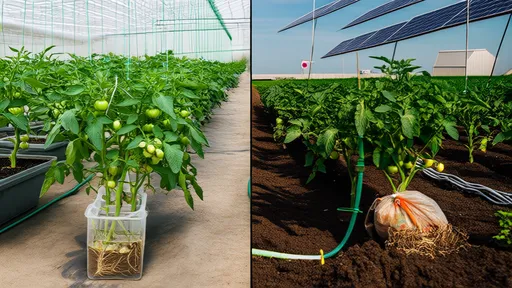
At first glance, buying local appears to be an unambiguous win for sustainability. A tomato grown down the road surely generates fewer emissions than one shipped across continents, right? Not necessarily. While transportation does contribute to greenhouse gas emissions, it’s often a surprisingly small slice of the pie. Studies show that transport typically accounts for less than 10% of a food product’s total carbon footprint. The bulk of emissions occur during production—think fertilizers, livestock methane, or energy-intensive greenhouse heating. A locally grown tomato cultivated in a fossil-fuel-heated winter greenhouse may have a higher carbon cost than one shipped from a sun-drenched open field thousands of miles away.
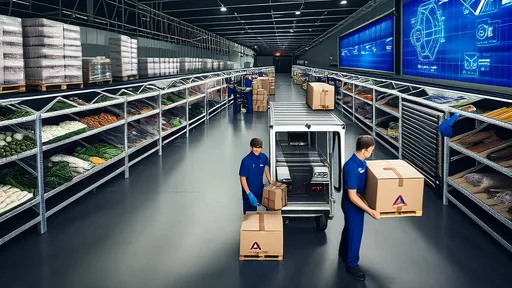
The mode of transportation introduces another layer of complexity. Container ships, despite their massive size, are extraordinarily efficient per ton-mile compared to trucks. A grape shipped by sea from Chile to Europe might incur lower transport emissions than one trucked domestically from a neighboring country. Air freight, while fast, is the true emissions villain—yet it accounts for less than 1% of food transport. The local food movement often overlooks these critical distinctions in supply chain logistics.
Seasonality further complicates the local-is-better narrative. The energy required to grow strawberries in winter—whether through artificial heating or artificial lighting—can eclipse the emissions saved by avoiding long-distance transport. Sometimes the most climate-friendly option is to eat what’s in season elsewhere rather than force local production year-round. This explains why New Zealand lamb, raised on pasture year-round, can have a lower carbon footprint than UK lamb requiring winter feed supplements, despite the long ocean voyage to European markets.
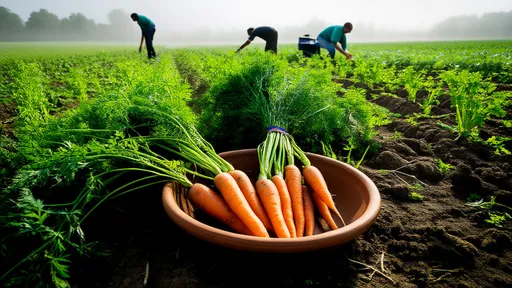
Perhaps the most overlooked factor is production efficiency. Regional variations in agricultural yields, farming practices, and resource availability create dramatic differences in emissions intensity. A study comparing global wheat production found that location-driven yield variations create 15 times more emissions difference than transportation distance. The most efficient producers—regardless of distance—often have the smallest environmental footprints. This explains why Dutch tomatoes, grown in hyper-efficient greenhouses, can outcompete local producers on emissions despite international distribution.
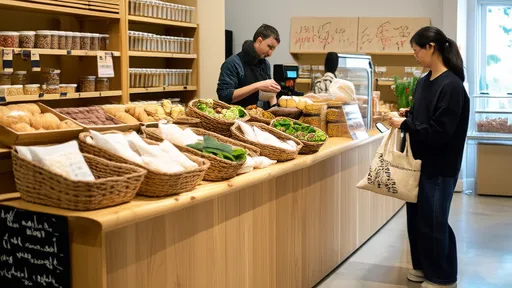
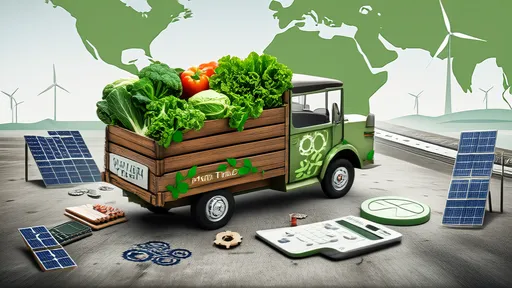
The local food movement isn’t wrong—it’s just incomplete. Reducing food miles does matter, but only as part of a broader emissions calculation. The true path to sustainable eating requires looking beyond geography to consider production methods, seasonality, and transportation modes. Sometimes buying local is the best choice; other times, it’s better to let climate-efficient distant producers feed us. As consumers, we need systems—like carbon labeling—that make these complex tradeoffs visible. Until then, the local food paradox reminds us that in food sustainability, simple answers are often wrong answers.

By /Jul 4, 2025
By /Jul 4, 2025
By /Jul 4, 2025

By /Jul 4, 2025

By /Jul 4, 2025
By /Jul 4, 2025

By /Jul 4, 2025
By /Jul 4, 2025
By /Jul 4, 2025
By /Jul 4, 2025

By /Jul 4, 2025

By /Jul 4, 2025

By /Jul 4, 2025

By /Jul 4, 2025

By /Jul 4, 2025

By /Jul 4, 2025

By /Jul 4, 2025

By /Jul 4, 2025

By /Jul 4, 2025

By /Jul 4, 2025